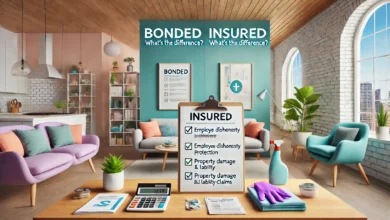
Understanding what insurance house cleaners need is essential for anyone offering professional cleaning services, whether you work independently or run a growing cleaning company. Cleaning may seem low-risk, but accidents, property damage, injuries, and misunderstandings happen more often than many people expect. The right insurance protects your income, your reputation, and your future. This guide explains the types of insurance house cleaners need, what each policy covers, how much they typically cost, and how to choose the right coverage in 2026.
Why Insurance Is Critical for House Cleaners
House cleaners work inside private homes, often around valuable items, pets, children, and slippery surfaces. Even the most careful cleaner can accidentally damage property or cause an injury.
Without insurance, you may be personally responsible for repairs, medical bills, or legal fees. One serious incident can wipe out months or even years of income.
Insurance also builds trust. Many clients actively ask whether a cleaner is insured before hiring, and some refuse to work with uninsured providers.
General Liability Insurance
General liability insurance is the most important type of insurance for house cleaners.
This policy covers third-party property damage and bodily injury caused by your cleaning services.
Common examples include:
• Accidentally breaking furniture or décor
• Scratching hardwood floors or countertops
• Causing water damage while cleaning
• A client slipping on a wet floor
General liability insurance typically covers repair costs, medical expenses, legal fees, and settlements.
Typical cost in 2026: $150 – $500 per year for solo house cleaners.
Bonding (Janitorial Bond)
Bonding is often confused with insurance, but it serves a different purpose.
A janitorial bond protects clients against theft or dishonest acts by a cleaner.
If a cleaner steals from a client, the bond may reimburse the client for their loss.
Bonding does not cover accidents, damage, or injuries.
Being bonded adds credibility and reassurance, especially for first-time clients.
Typical cost in 2026: $50 – $200 per year.
Workers’ Compensation Insurance
Workers’ compensation insurance is required in many regions if you have employees.
This coverage pays for medical care, lost wages, and rehabilitation if an employee is injured on the job.
Cleaning work involves physical labor, repetitive motion, lifting, and exposure to chemicals, which increases injury risk.
Without workers’ compensation, you could be personally liable for employee injuries.
Typical cost in 2026: $500 – $2,000+ per year, depending on payroll and location.
Do Solo House Cleaners Need Workers’ Compensation?
If you work completely alone with no employees, workers’ compensation is usually not required.
However, rules vary by location, and some policies allow solo owners to opt in for personal protection.
If you hire even one part-time helper, workers’ compensation may become mandatory.
Commercial Auto Insurance
If you use a vehicle for business purposes, your personal auto insurance may not provide full coverage.
Commercial auto insurance helps cover accidents, vehicle damage, and liability while driving for work.
This is especially important if you transport supplies, equipment, or employees.
Typical cost in 2026: $600 – $1,200 per year, depending on coverage and vehicle use.
Tools and Equipment Insurance
House cleaners rely on equipment such as vacuums, steam cleaners, and specialty tools.
Tools and equipment insurance covers theft, loss, or damage to your cleaning gear.
This coverage is optional but useful if you own expensive equipment.
It does not cover damage to clients’ property.
Professional Liability Insurance
Professional liability insurance, sometimes called errors and omissions insurance, covers claims related to negligence or failure to perform services as promised.
While less common for house cleaners, it may be useful for businesses offering specialized services or contracts with strict performance standards.
This insurance protects against claims that go beyond physical damage.
Residential vs Commercial Cleaning Insurance Needs
Residential house cleaners usually need basic general liability insurance and optional bonding.
Commercial cleaning contracts often require higher liability limits, workers’ compensation, and proof of insurance.
Some commercial clients also require additional insured endorsements or certificates of insurance.
Always review contract requirements before accepting commercial work.
Insurance Coverage Limits to Consider
Many house cleaners choose coverage limits such as:
• $1 million per occurrence
• $2 million aggregate per year
These limits provide reasonable protection and meet most client requirements.
How Much Insurance Does a House Cleaner Really Need?
The right amount of insurance depends on your business size, services, and risk exposure.
For most solo house cleaners, the essentials include:
• General liability insurance
• Optional bonding
For cleaning businesses with employees or commercial clients, additional coverage becomes necessary.
Common Insurance Mistakes House Cleaners Make
Operating without insurance to save money.
Assuming homeowners’ insurance will cover damage.
Not updating coverage as the business grows.
Misclassifying workers to avoid workers’ compensation.
These mistakes often lead to serious financial consequences.
How Insurance Helps You Get More Clients
Insurance is not just protection — it’s a marketing advantage.
Clients feel safer hiring insured cleaners.
Many property managers and homeowners require proof of insurance.
Being insured allows you to charge professional rates instead of competing only on price.
Frequently Asked Questions
Is insurance legally required for house cleaners?
Requirements vary by location, but insurance is strongly recommended even when not legally required.
Does insurance cover theft?
Theft is usually covered by bonding, not liability insurance.
Can clients sue me if I’m insured?
Yes, but insurance helps cover legal defense and settlements.
How fast can I get insured?
Many insurance providers offer same-day coverage.
Conclusion
So, what insurance do house cleaners need? At a minimum, every professional house cleaner should carry general liability insurance to protect against accidents and property damage. Bonding adds trust and protection against theft, while workers’ compensation becomes essential as soon as you hire employees.
The cost of insurance is small compared to the financial risk of operating without it. In a trust-based industry like house cleaning, proper insurance protects not only your business, but also your reputation and long-term income.
In 2026, being insured is no longer optional for house cleaners who want to operate professionally, attract quality clients, and grow with confidence.