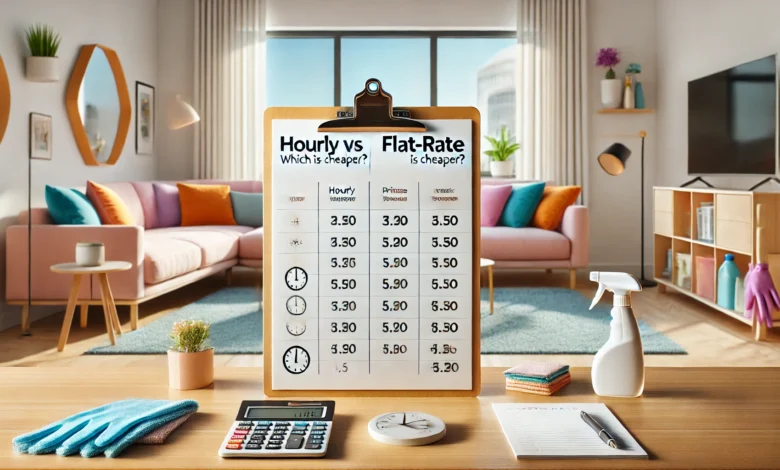
When you’re ready to hire a professional cleaner, one of the first questions you’ll encounter is pricing: Should you choose an hourly rate or a flat-rate fee? At first glance, this may seem like a simple matter of numbers — but the right answer depends on your home, the type of cleaning needed, how often you clean, and what expectations you and your cleaning provider set. In this article, we break down the differences between hourly and flat-rate cleaning pricing, explore real cost examples, help you understand the pros and cons of each, and offer guidance on how to decide which option is cheaper and more practical for your situation in 2026.
Understanding the Two Pricing Models
Professional cleaners typically use one of two pricing strategies: hourly pricing or flat-rate pricing.
Hourly pricing means you pay based on the number of hours the cleaner spends working in your home. For example, if a cleaner charges $40 per hour and works for 3 hours, the total is $120. This model is common for independent cleaners and jobs where the scope isn’t entirely predictable in advance.
Flat-rate pricing (also called fixed pricing) means you pay a set price for a defined set of services — regardless of how long it takes. For instance, a cleaning company might charge $150 for a standard cleaning of a two-bedroom apartment, whether it takes 2 hours or 3.5 hours. Flat rates are more predictable and are often used for routine cleanings or defined service packages.
Both models aim to cover labor, supplies, overhead, and profit — but they distribute cost and risk differently between you and the cleaner.
How Hourly Pricing Works
With hourly pricing, the cleaner records the time spent on site and charges you based on that duration. This approach mirrors the structure of many service-based industries like tutoring, consulting, or repair work.
Typical hourly rates for professional home cleaners in 2026 range from roughly $30 to $60 per hour per cleaner, depending on location, experience, and company reputation.
Here’s how an hourly job might look in practice:
- A cleaner arrives, starts the clock, and works through your job list.
- You pay for every hour the cleaner is actively working.
- If you ask for more tasks mid-job (say, adding fridge interior cleaning), those hours are added to the total.
Hourly pricing can feel fair because you pay strictly for time spent, especially when tasks are uncertain. But it also means the price can shift upward if the cleaner moves slower than expected or if the home condition is worse than anticipated.
How Flat-Rate Pricing Works
Flat-rate pricing gives you one price up front for a specific cleaning package. It’s based on an agreed scope of work — often tied to home size, number of bathrooms, and level of cleaning.
A flat-rate package might include:
- Dusting, vacuuming, mopping
- Kitchen surface cleaning
- Bathroom sanitization
- Standard tasks up to a defined checklist
A cleaner quotes a price like “$180 for a standard 3-bedroom cleaning,” and that’s your total cost — no matter if it takes 2.5 hours or 3.5 hours. Custom add-ons (interior oven/fridge cleaning, inside cabinets) usually cost extra.
Flat rates appeal to clients who want predictability and peace of mind. They also allow cleaners to manage workflow more effectively because they aren’t tracking hours as closely.
Side-By-Side Price Comparison
Here’s a general comparison of how costs can stack up between hourly and flat-rate pricing for similar scenarios in 2026:
| Scenario | Hourly Pricing (est.) | Flat-Rate Pricing (est.) |
|---|---|---|
| Studio Apartment (Standard Clean) | $80 – $150 (2–3 hrs) | $100 – $140 |
| 1-Bedroom, 1-Bath | $100 – $180 (3–4 hrs) | $120 – $180 |
| 2-Bedroom Family Home | $150 – $300 (4–6 hrs) | $180 – $280 |
| Deep Cleaning (Large Home) | $250 – $450 (8–12 hrs) | $280 – $500+ |
These figures are general estimates — individual cleaners and companies may price differently based on region, competition, or scope. What’s clear is that neither model is universally cheaper; the cost depends on how your job fits the pricing structure.
When Hourly Pricing Is Typically Cheaper
Hourly pricing can come out cheaper in several scenarios:
Small or Quick Jobs
If your home is small or needs only light cleaning, hourly pricing may cost less than a flat fee. For example, a 2-hour clean at $35/hr totals $70 — likely lower than many flat-rate minimums.
Uncertain or Limited Scope
When you aren’t sure what must be cleaned or if you don’t need a full checklist, hourly pricing ensures you pay only for the time the cleaner spends working.
No Hidden Tasks
If your cleaning needs are straightforward and don’t involve tricky areas (like inside appliances or heavy detail work), hourly pricing can be economical.
Clutter-Free, Well-Maintained Homes
Homes cleaned regularly often take less time. In this case, paying by the hour means costs reflect the reality of an easy job.
When Flat-Rate Pricing Is Typically Cheaper
Flat-rate pricing shines in these situations:
Large Spaces
In larger homes, flat rates often spread the price across the entire job, which can be lower than adding hours for every corner cleaned.
Detailed or Deep Cleaning
Deep cleanings can take unpredictable amounts of time. Flat rates protect you from escalating costs on lengthy tasks.
Defined Cleaning Packages
If you want a checklist — like standard kitchen, bathrooms, floors, and dusting — flat pricing gives you certainty about the total price.
Recurring Services
Monthly or biweekly flat-rate plans often cost less per visit than hourly pricing because regular maintenance keeps jobs quicker and more efficient.
Pros and Cons of Hourly Pricing
Pros
- Only pay for actual time worked
- Flexible scope during the job
- Good for light, quick cleanings
- Avoid surprises if the job is easy
Cons
- Unpredictable final cost
- Time tracking may feel imperfect
- Longer jobs can get expensive quickly
- Harder to budget for recurring service
Pros and Cons of Flat-Rate Pricing
Pros
- Predictable total cost
- Easy budgeting for regular cleanings
- No hourly clock pressure
- Clear checklist expectations
Cons
- May cost more for small or quick jobs
- Add-ons often priced separately
- Less flexibility once the scope is set
- Quality may vary if workers rush to finish in allotted time
Hidden Charges and Add-Ons to Watch For
Whether you choose hourly or flat pricing, understanding what’s included in the price is critical. Some extra charges that often creep into quotes include:
- Supplies and equipment fees
- Minimum service charges
- Travel or parking fees
- Cleaning inside appliances (oven, fridge)
- Carpet shampooing or steam cleaning
- Interior window or blind cleaning
Always ask for a detailed breakdown so you can compare pricing accurately between providers.
Tips for Comparing Hourly vs Flat-Rate Quotes
To decide which pricing model is cheaper for your specific needs:
- Define the scope of work you need — list tasks you want done.
- Get multiple quotes using the same scope for fair comparison.
- Ask whether supplies are included — if not, clarify removals.
- Check for minimum time or minimum price requirements.
- Clarify fees for travel, holidays, weekends, or same-day booking.
Comparing “apples to apples” makes it easier to choose the right option rather than just the lowest number.
Real-World Examples
Example 1: Small Apartment
• Hourly: $35/hr × 2.5 hrs = $87.50
• Flat-Rate: $110 for standard cleaning
➤ Hourly wins because the job is quick and light.
Example 2: Large Home Deep Clean
• Hourly: $45/hr × 8 hrs = $360
• Flat-Rate: $320 for deep cleaning package
➤ Flat-rate wins because it caps total cost.
Example 3: Recurring Biweekly Service
• Hourly: $40/hr × 3 hrs = $120 per visit
• Flat-Rate Contract: $100 per visit
➤ Flat contract is cheaper over time and predictable.
Frequently Asked Questions
Which pricing model do cleaners prefer?
Cleaner preference varies — some prefer hourly to ensure fair pay for time, others like flat rates for predictable income. Both can work well when expectations are clear.
Is tipping expected in either model?
Tipping is optional but appreciated. Common practice is 10–20% of the bill for exceptional service.
Can pricing change if my home is very messy?
Yes. In hourly pricing, the cleaner simply works more hours. With flat pricing, companies may re-quote or add extra fees if the home condition is far beyond the original scope.
Can I switch pricing models later?
Yes — as long as you and the cleaning company agree before work begins.
Conclusion
So, which is cheaper — hourly or flat-rate cleaning? The answer depends on your home size, the condition of your space, how detailed you want the cleaning to be, and whether the work is one-off or recurring. Hourly pricing can be cheaper for small, simple, or quick jobs, while flat-rate pricing often wins for large homes, deep cleans, and recurring services where predictability and defined checklists are valuable.
Rather than assuming one model is always cheaper, compare quotes using the same scope of work, understand what’s included (and excluded), and factor in your own tolerance for unpredictability versus flat certainty. With clear expectations and honest communication, both hourly and flat-rate pricing can deliver excellent results — the key is choosing the right fit for your budget and cleaning needs in 2026.